
Robotics and surgery: what is real today
14 June 2026 | By FutureHealth.mu | Updated 17 June 2026
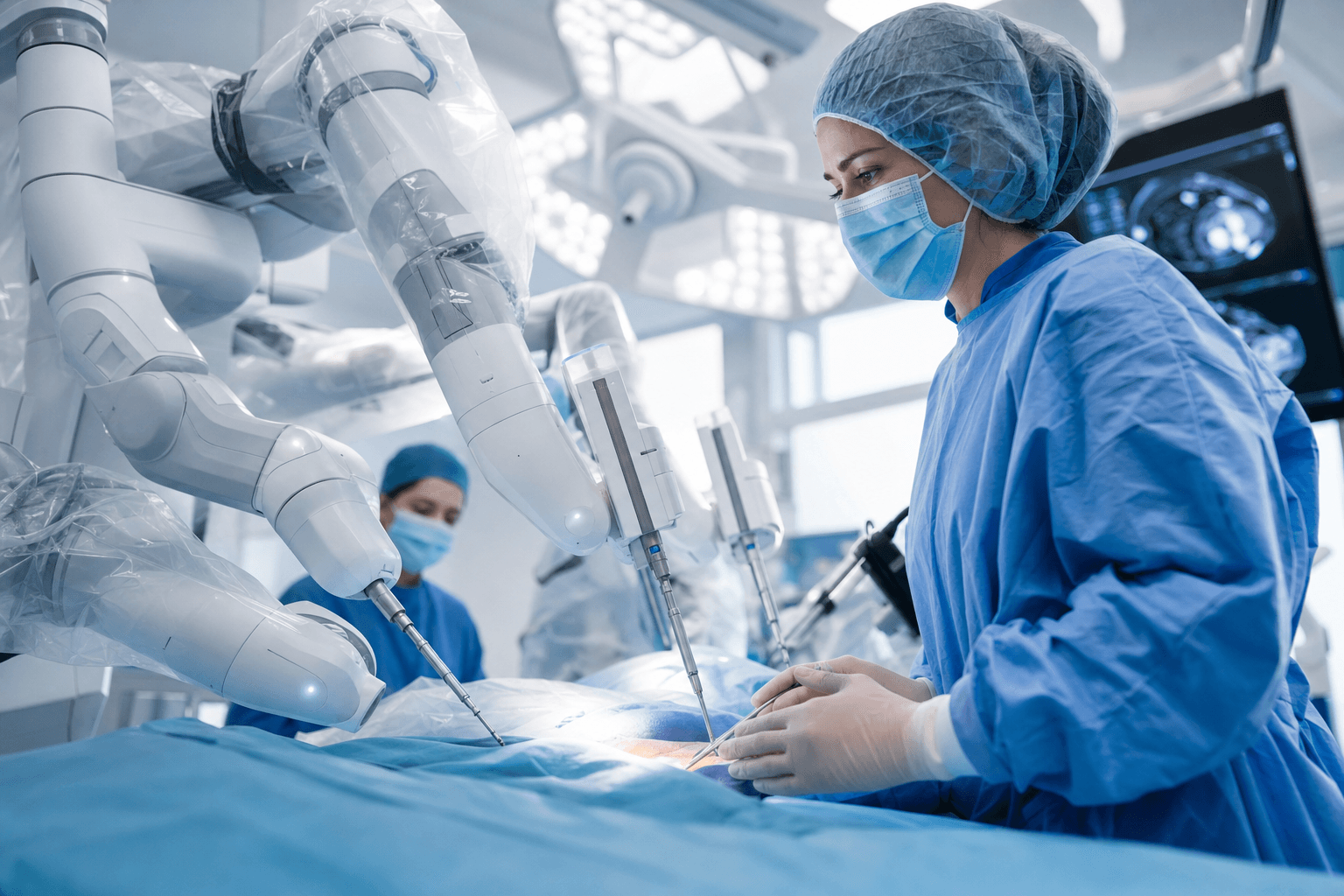
Mention robots and surgery in the same sentence and many people picture a machine operating on its own. The reality is both less dramatic and more interesting. Robotic systems are already used in operating rooms around the world, but they are tools guided by human surgeons, not independent operators. Understanding what they really do helps cut through the science fiction.
What a surgical robot actually is
A modern surgical robot is best thought of as a set of very precise, controllable instruments. In the most common systems, the surgeon sits at a console a short distance from the patient and views a magnified, high definition image of the operating site. Their hand movements are translated, in real time, into the movements of small instruments inside the body.
Crucially, the robot does not decide anything. Every movement comes from the surgeon. The system can filter out the natural tremor in a human hand and allow instruments to bend and rotate in ways human wrists cannot, but it is the surgeon who plans and performs the operation.
The real benefits
The main advantage of robotic systems is precision in tight spaces. Because the instruments are small and highly manoeuvrable, surgeons can sometimes operate through a few tiny incisions rather than one large opening. This is a form of minimally invasive surgery.
For patients, minimally invasive approaches can mean less blood loss, smaller scars, lower risk of infection and a quicker recovery. The magnified view also helps surgeons see fine structures clearly. Robotic systems are now used in many areas, including some urological, gynaecological and general surgical procedures.
What the evidence shows
It is important to be measured. For some procedures, robotic surgery offers clear advantages over older open surgery. For others, the benefit over standard keyhole surgery is smaller, and the best approach depends on the specific operation and the individual patient. Robotic systems are also expensive, which affects where they are available. More technology is not automatically better technology.
Who is in charge
This point deserves emphasis because it is so often misunderstood. The surgeon remains fully in control throughout. The robot has no autonomy. It cannot start, stop or change an operation by itself. Trained surgical teams, the same nurses and anaesthetists you would expect in any operation, remain present in the room. The technology extends a surgeon's abilities; it does not replace their judgement.
The road ahead
Research continues into systems that offer even greater precision, better imaging and helpful guidance during operations. Some experimental systems use software to highlight structures or warn of risks, but a qualified human stays responsible for every decision. The likely future is one of better assistance, not absent surgeons.
What this means in Mauritius
Advanced surgical technology is gradually spreading, and patients may encounter robotic or minimally invasive options in specialist centres. If such an option is offered to you, it is reasonable to ask practical questions: Is this approach genuinely better for my specific condition? How experienced is the team with this system? What are the benefits and risks compared with the alternatives? What is the cost?
A sensible approach
The best operation is not the one with the most impressive equipment, but the one most suited to your situation and performed by an experienced team. If you are facing surgery and are unsure which approach is right, talk it through with your surgeon and, if you wish, seek a second opinion.
Robotic surgery is a genuine advance, already helping real patients today. Seen clearly, it is a powerful instrument in skilled human hands, which is exactly how it should be.
Tomorrow's healthcare supports a longer, healthier life. Explore the wider Medtech health ecosystem.